2026-08
21Aviation Plug (Aviation Connector)
An aviation plug is a type of connector. Its key feature is high reliability, making it suitable for scenarios requiring highly‑reliable connections. Originating from the military industry, it was widely used on aircraft, hence its name, commonly shortened to aviation plug. As an electromechanical component for connecting electrical circuits, its electrical parameters are the primary consideration when selecting an aviation plug. Proper selection and use of aviation plugs are critical to ensuring circuit reliability.
Aviation plug is a broad term covering the following categories:
1. Special‑purpose aviation plugs for servo motors
2. Special‑purpose aviation plugs for textile intelligent control systems
3. Russian military‑standard aviation plugs
4. US military‑standard aviation plugs
5. National‑standard aviation plugs
6. Chinese national military‑standard aviation plugs
7. Ordinary circular aviation plugs
8. Small‑size circular waterproof aviation plugs
9. Hermetic glass‑sintered aviation plugs
10. Self‑developed special‑purpose aviation plugs
11. Aviation plugs for communication facilities
12. Ultra‑small precision aviation plugs
Each type of aviation plug has subtle differences. China initially introduced aviation components from Russia, and later imported equipment from the United States, Europe and other regions. As a result, aviation plug specifications on many pieces of equipment are inconsistent.
Aviation plugs can be classified by different criteria:
• By frequency: high‑frequency aviation plugs and low‑frequency aviation plugs
• By shape: circular connectors, square connectors, etc.
• By application: rack‑mount aviation plugs, audio‑equipment aviation plugs, power‑supply aviation plugs, special‑purpose aviation plugs, and so on.
As components for electrical circuit connections in aerospace applications, aviation plugs are subject to stringent requirements.
Chinese Standards for Aviation Plugs
1. Comply with relevant requirements of IEC 60364 Electrical Equipment for Civil Aircraft, including safety earthing, overload protection, lightning protection, corresponding certification marks and test methods. See GB/T 18274‑2000 Electrical Equipment for Civil Aircraft for detailed standards.
2. Meet relevant requirements of SAC3025‑2006 Technical Specifications for Power Supply Systems of General Aviation Airports issued by the Civil Aviation Administration of China.
3. Designed, manufactured, used, maintained and serviced to satisfy airline operational needs and guarantee flight safety.
4. Possess sufficient mechanical strength and durability. They shall resist shock, vibration and temperature changes without deformation, damage, fracture or detachment. They shall resist aging and cracking under temperature fluctuations, and operate reliably in harsh environments without hidden faults or failure.
5. Feature corrosion resistance, resisting corrosion and dissolution from various acid, alkali and salt solutions to maintain functional performance.
6. Have adequate elasticity to limit plastic deformation under external mechanical forces, retaining shape and resisting damage.
7. Adopt a compact, rational structure for simple, safe and reliable installation and operation.
8. Deliver good interchangeability and maintainability.
Qualification Criteria for Aviation Plugs
1. Moisture resistance: Humidity degrades insulation performance and causes oxidation and corrosion of metal parts. In the constant‑temperature‑humidity test, the environment shall be maintained at 90%‑95% relative humidity and 40±2 °C. Aviation plugs shall operate continuously for 96 hours to verify moisture‑resistance performance per test specifications.
2. High‑temperature resistance: The operating temperature range of aviation plugs is −65 °C to 200 °C. Operating temperature is the sum of ambient temperature and temperature rise at contact points. Relevant specifications define allowable temperature‑rise limits.
3. Salt‑fog resistance: In high‑humidity, high‑salt environments, metal parts and contacts suffer electrochemical corrosion, impairing insulation and connection performance. Salt‑fog testing is performed: the plug is suspended in a constant‑temperature test chamber, where standard‑concentration sodium chloride solution is atomized by compressed air to generate salt fog. The standard requires a minimum 48‑hour exposure to salt‑fog conditions.
4. Shock and vibration resistance: Applications such as aerospace, railway and road transport demand robust construction and reliable electrical contact. Shock tests shall follow specified peak acceleration, duration and shock pulse waveform requirements.
5. Other evaluation parameters: Sealing performance, liquid immersion resistance, and low‑pressure resistance.
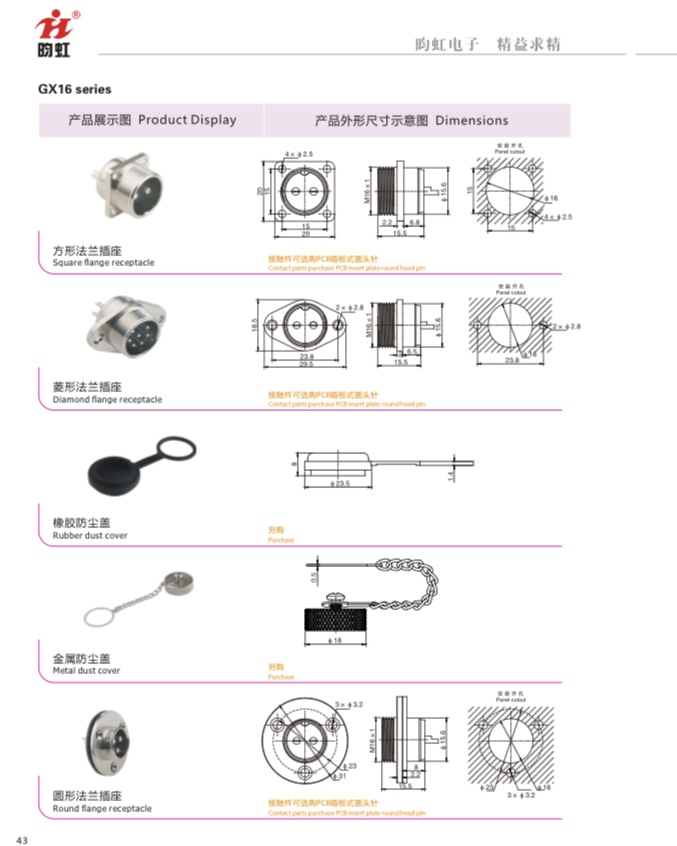
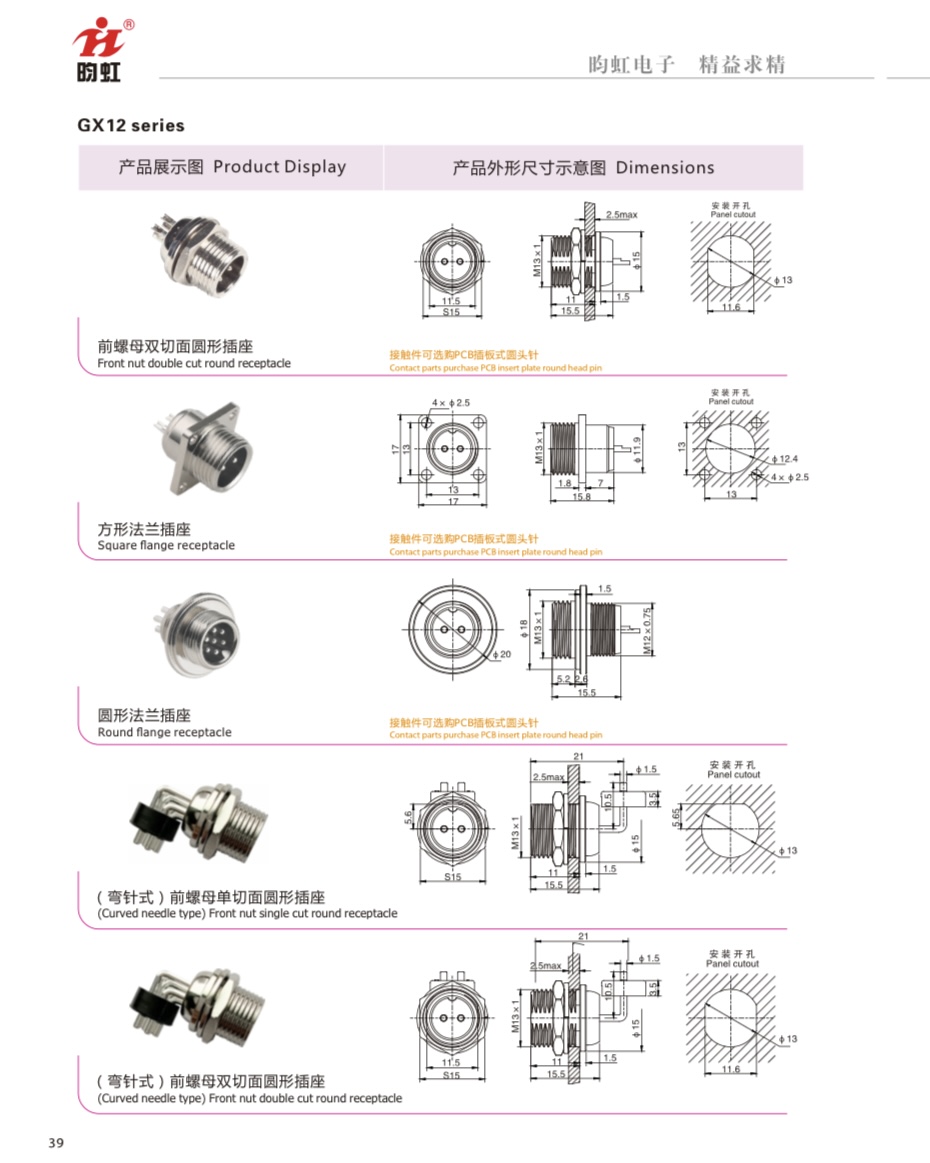
Aviation plugs achieve safety through multiple technical means. As shown in the figure, performance including stability, waterproofing, drop resistance, tensile resistance and heat resistance is realized by different components. In recent years, new products have emerged, such as encapsulated network cable plugs and optical fiber plugs using aviation‑plug technology.
Aviation plugs are widely applied in instruments, aerospace, military equipment and other fields. They enable fast, efficient and safe connections. Different interfaces adopt dedicated aviation plugs to prevent mis‑connection.
In the future, aviation plugs will see growing adoption in communication equipment, power equipment and power supply devices requiring high‑reliability connections.